Posted in Being Prayerful, Celebrating Existence, Life, Life lessons, Mindset, personal growth

The Importance of Mental Health

There are certain things in life that quietly shape who we are, yet we rarely stop to talk about them. Mental health is one of those things.

It influences how we think, how we feel, how we cope with challenges, and how we connect with the people around us. In many ways, it sits quietly at the center of our overall well-being.

Mental health is often misunderstood as simply the absence of illness, but it is much more than that. It is about emotional balance, resilience, and the ability to navigate life’s ups and downs. None of us move through life without moments of stress, sadness, uncertainty, or pressure. Those experiences are part of being human. What matters is how we learn to manage them and the support systems we have around us.

Mental health also exists on a spectrum. At different points in our lives, we may feel strong and confident, while at other times we may feel overwhelmed or uncertain. Personal experiences, family environments, friendships, school or work pressures, and even the communities we live in can influence how we feel.

Early experiences can have a particularly strong impact. Supportive families, caring friendships, and safe communities can help build resilience and confidence. On the other hand, experiences such as bullying, harsh treatment, or constant pressure can take a quiet toll on emotional well-being.

Today’s world also presents its own unique pressures. The pace of life, academic expectations, and the constant presence of social media can sometimes make it difficult to pause and simply breathe. While digital spaces can offer connection and support, they can also create comparison and unrealistic expectations that affect how people see themselves.

Yet despite how common these experiences are, conversations about mental health are still often surrounded by silence. Many people hesitate to speak openly about how they feel because they fear judgement or misunderstanding. Unfortunately, silence rarely makes things easier. More often, it allows struggles to grow in the background.

This is why awareness and open dialogue are so important.

Each year on October 10th, the world observes World Mental Health Day. It serves as a reminder that emotional well-being deserves the same attention and care as physical health. Schools, communities, and organizations often use this time to encourage discussions and activities that help break the stigma surrounding mental health.

One simple way to think about protecting mental wellness is through what some refer to as the five Cs: Care, Connection, Courage, Compassion, and Consistency.

Care reminds us to take time for ourselves and our well-being.
Connection highlights the value of meaningful relationships and supportive friendships.
Courage encourages us to speak openly when we are struggling.
Compassion calls for kindness toward both ourselves and others.
Consistency reminds us that healthy habits practiced daily can make a real difference.

Small habits often have a powerful impact. Getting enough rest, eating nourishing foods, balancing responsibilities with relaxation, and spending time on activities that bring joy—whether that is music, reading, art, or exercise—can help restore a sense of balance.

Mental health, however, is not only a personal responsibility. It is also shaped by the environments and systems around us. Schools, workplaces, communities, and governments all play a role in creating spaces that support emotional well-being. Policies, education, and accessible support services can make a meaningful difference in people’s lives.

Another important aspect of the conversation is suicide prevention, which remains a global priority. Efforts such as early support systems, responsible media reporting, and emotional education for young people continue to play a critical role in reducing risks and saving lives.

At the same time, there is growing recognition of the importance of protecting the mental health of children and adolescents. Support for caregivers, school-based programmes, and healthier online environments all contribute to building stronger foundations for future generations.

What is important to remember is that mental health does not follow a simple formula. Some people experience difficult circumstances and remain resilient, while others may struggle even when everything around them appears stable. The human experience is complex, and emotional well-being is shaped by many different factors over time.

Perhaps the most meaningful thing we can do is create a culture of understanding and empathy. When people feel safe to speak openly, when kindness replaces judgement, and when support replaces silence, communities become stronger.

Valuing mental health alongside physical health allows individuals to grow, learn, and reach their full potential.

And sometimes, the most powerful reminder we can offer each other is a simple one:
no one should ever feel that they have to face life’s challenges alone.
Posted in Jade, Jade and its origin; value of Jade

Celebrating Jade

Maybe you know and maybe you don’t!

It is something that may be an eye-opener for many but it certainly promises to be a rewarding and interesting post!

How familiar are you with Jade?

Do you know it is a precious stone that emits positive energy and it is not something you buy for yourself but it is something you should be gifted with? Well this is true and really worth taking note of!

Photo credit: http://www.threadmagazine.com

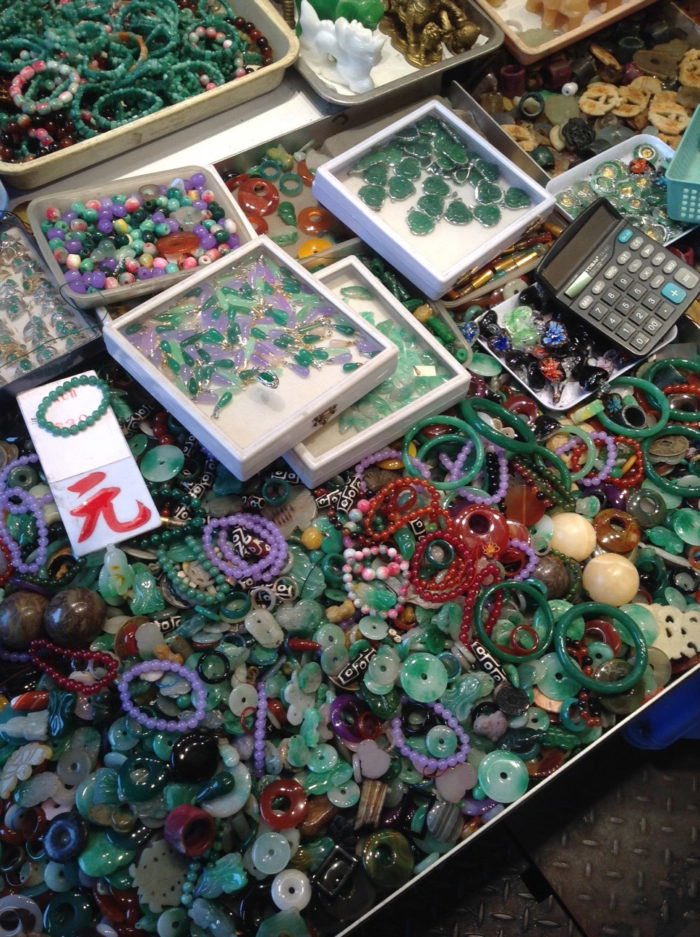
Jade is a precious stone indeed and it is made from nephrite and jadeite. Jadeite is in itself a combination of sodium- and aluminium-rich pyroxene.

More so Jade exists in six different colours: green, lavender, red, yellow, white and black. Green is the most traditional and expensive color for jade. I personally love it. The green color varies from pale or yellowish green to Granny Smith apple green, its best. The energy from the person gifting it to you and you being the recipient is purely positive. Giving positive energy to someone means that positive energy comes back to you!

Based on this we can surely agree that jade can be an ideal gift for so many reasons:

  1. It gives positive energy and lot and lots of it too!
  2. It has a lot of value.
  3. It shows appreciation and love.
  4. It is a symbol of purity.
  5. It shows that you are worth something unique and something that costs as much as jade costs.
  6. It makes a statement.
  7. It means if someone decides to steal it they create added negative energy for themself.

Photo Credit: http://www.amazon.com

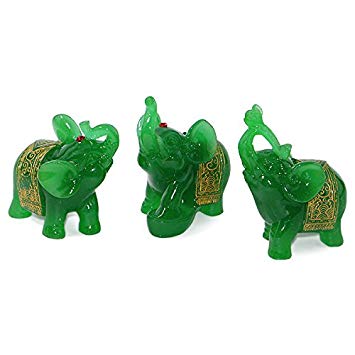
Therefore if you see this precious stone being used in any particular setting be grateful for it. Whether it is used in spiritual practice (Jade murtis, jade chairs), given as a housewarming present (jade elephants, jade dog), given as a personal gift (like earrings, necklaces or rings) or anything of the sort, be eternally thankful for its use. Know that it is a good sign and enjoy the positive energy that comes with it. Receive it with love and if you are giving it to someone give it with love.

As my Uncle Steve would surely agree when you have a woman named Jade in your life she is a blessing and certainly a gift from God!

Posted in Helping Persons with Disabilities, Life, Uncategorized

Celebrating Knowledge: How can we help Persons with Disabilities?

The focus of my thesis for my BA Mass Communication at the Ken Gordon School of Journalism and Public Relations (KGSOJACS) at COSTAATT (College of Science, Technology and Applied Arts of Trinidad and Tobago) was ‘The Accessibility of the Internet for persons living with disabilities in Trinidad and Tobago.’
This is a topic I opted to examine because it is a topic I am very passionate about. More so it is a topic that touched my heart then and a topic which continues to do so today.
I have been creating several means of helping persons with disabilities and I have faced several challenges along the way. Having seeing a recent post on Facebook stating, “Being differently abled and young is very challenging,” and this was later followed by a post stating, “We want to feel accepted like everyone else!”

My response to this is as follows:
Having met with several persons living with disabilities in Trinidad and Tobago I know a vast majority of them who face several challenges day in and day out. They do not deserve be unfairly treated or like they are unequal in any way. My modus operandi is to treat others as you would like to be treated and I believe that change comes from a conscious decision to want to change.
Of the people I worked with to get the findings of my thesis I found a group of highly educated and qualified persons living with disabilities. They didn’t have the best start or the easy life but they all have one thing in common: They refuse to give up!
To those who have embraced the entrepreneurial spirit I salute them for making that commitment.

The questions which we need to ask is how can each one of us help someone living with a disability? How can we make information more accessible to them? How can we do our part to enrich their quality of life? Here are 4 pointers:

  1.  Leave ALL Handicapped Parking Spots for persons who are Handicapped. They are called Handicapped Parking Spots for a reason.
  2. Elevators should be available in all buildings that have 2 floors or more. Imagine my horror on hearing that one of the guys who helped me with the findings of my thesis telling me of the unfortunate experience he endured for a job interview. He went for a job interview in a building that no elevators and his interview was being held on the 4th floor. Can you imagine what he went through? To help you understand it better I will shed some light on his dilemma. He lives with Charcot-Marie Tooth Disease (CMT), he has a lot of difficulty with his mobility and with the use of his hands but uses assistive technology to get by while he can as his condition has been deteriorating. Can you imagine the difficulty he faced in getting up the stairs? Can you imagine the embarrassment he faced on another occasion when he fell and people laughed at him? Surely we can all agree that none of this is right! For more information on CMT please visit: https://www.medicalnewstoday.com/articles/172056.php
  3.  Refrain from giving directions to someone who cannot see if you are unsure about the directions. It is really unfortunate that some people do this and create bigger problems as they person who cannot see may get lost and a predicament like can also result in placing that person in danger. The reality is that I have heard of too many incidents like this happening. Thankfully, many are relying on WAZE and Google Maps and both apps are proving to be quite helpful.
  4.  Use Word Documents as far as possible to post online memes, menus, flyers and advertisements or any document with text for that matter. Or just type them out if you choose not to provide them in word. Photographs cannot be read by any of the assistive technologies and the information provided within them cannot be communicated to someone who is visually impaired unless you are there to read it out to them. A popular screen reader most of them use is JAWS (Job Access with Speech) and these are some ways you can make photographs more accessible to them as visually impaired persons will not be able to understand what they contain:
  • Upload text as Word Documents
  • Provide captions which describe what the picture contains or what it is about

In closing I hope that this information is of help and put to good use! Let us continue to be good and let us continue to do good! A little goes a long way; it costs us nothing to be human! Change begins with a decision to change and making the effort to do so!
As mentioned above this is my first post regarding this topic and I look forward to sharing more information with you soon on how we can be of help to persons with disabilities.