Posted in Being Prayerful, Family Moments, Festivals and Celebrations, Love and Blessings, Spiritual Reflections, Sri Ganapathy Sachchidananda Swamiji, Sri Swamiji's Teachings

Guided by Light: A Deepavali Blessed by Sri Swamiji

Deepavali is and has always been a very special occasion for us — a time to pause, reflect, and celebrate light in all its forms. But this Deepavali 2025 was different. Like other days filled with blessings, this for us brought an abundance of blessings, quiet joy, and those sacred, unexpected moments that only divine grace can arrange.

We knew from the start it would be a simple celebration this year. With both our schedules and Shiva coming home from work on Deepavali morning, the plan was to make the most of our day. Our kids filled the day with warm excitement. After their Deepavali program at school last Thursday, they had been counting down the days, and their enthusiasm was evident in their joy.
Their excitement wasn’t the loud, restless kind — it was that special kind of energy that fills every corner of the home. They were bubbling with happiness, talking about lights.

Lunch was simple — not the full traditional spread this time, but what we felt like having. For me, it turned out to be a gluten-free, slightly odd fusion of flavors, but it felt just right for the day. The food, the laughter, the calm — everything flowed naturally. The afternoon stayed quiet too, with the kids happily drawing and coloring, their little creations adding color to the calm rhythm of the day.

As the sun began to set, we offered our prayers and lit some deyas, watching their soft glow spread through our home. The warm light felt symbolic — a reminder that Deepavali is about is about the quiet strength of light overcoming darkness, both around and within us.

Later that evening, Shiva and I decided to take the kids for a drive to see the Deepavali lights. It was meant to be a short outing, just to let them enjoy the sparkle of the night. But, as it often happens when the Divine guides your steps, we were led somewhere far more meaningful and we were where we were meant to be.
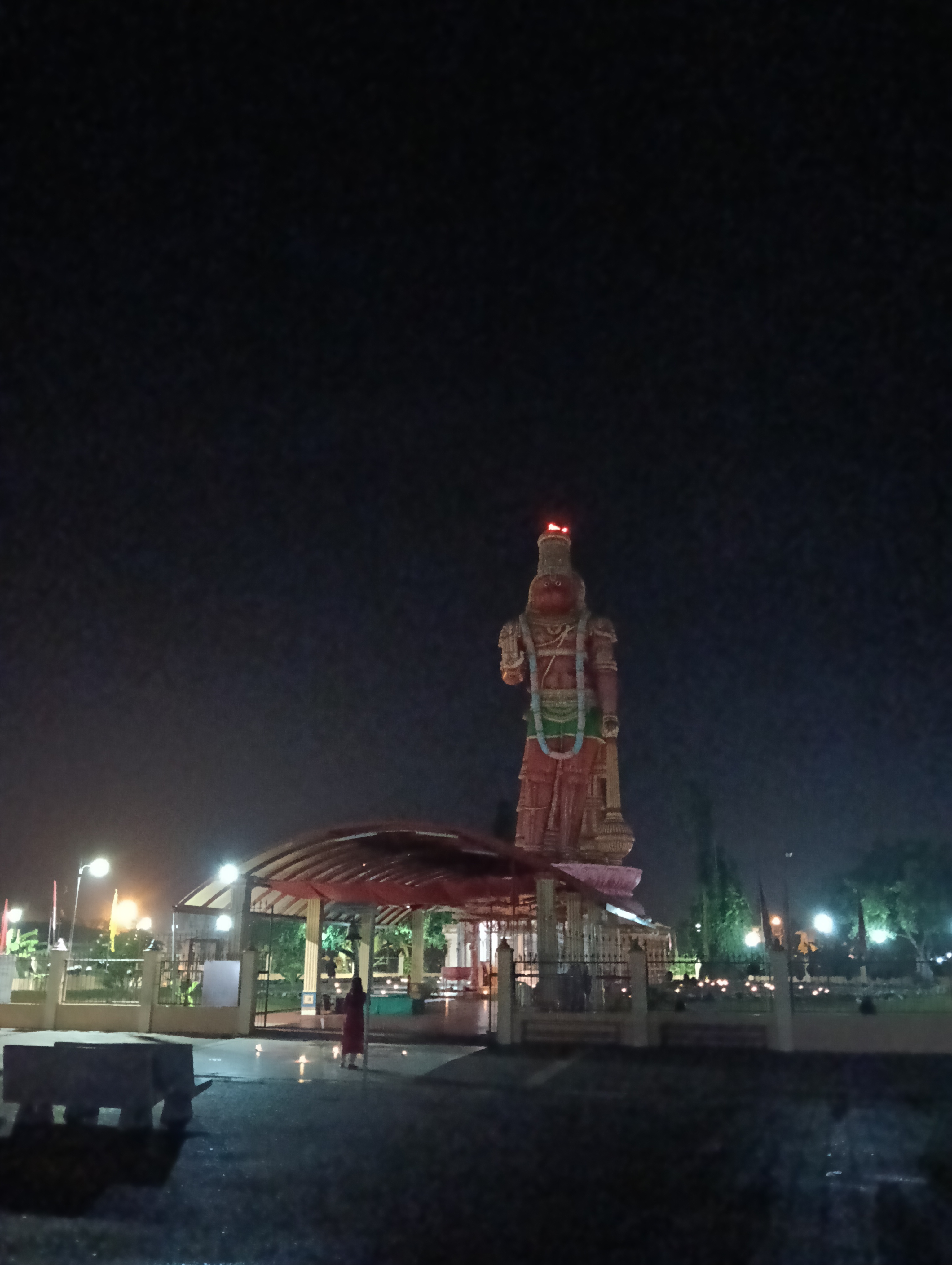
Our drive ended at Sri Datta Yoga Center, Carapichaima, by Lord Hanuman, in time for the evening aarti and everything that followed. The moment we arrived, everything felt perfectly aligned.

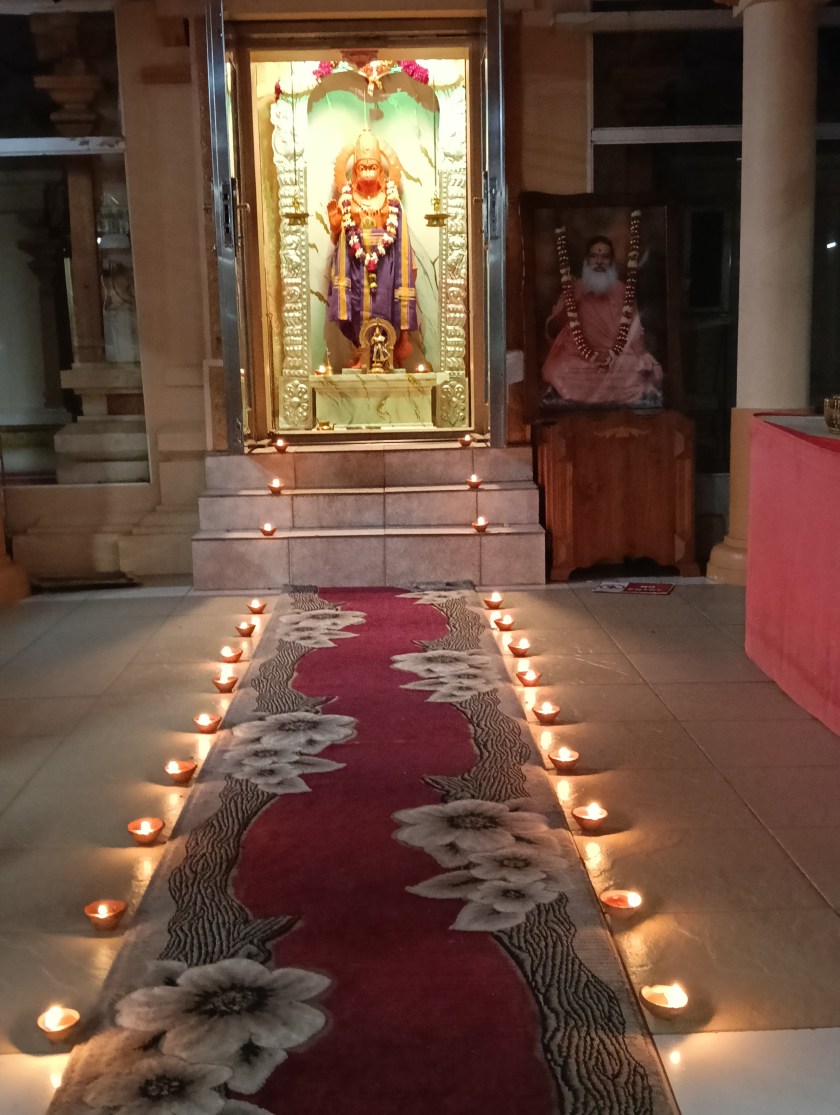
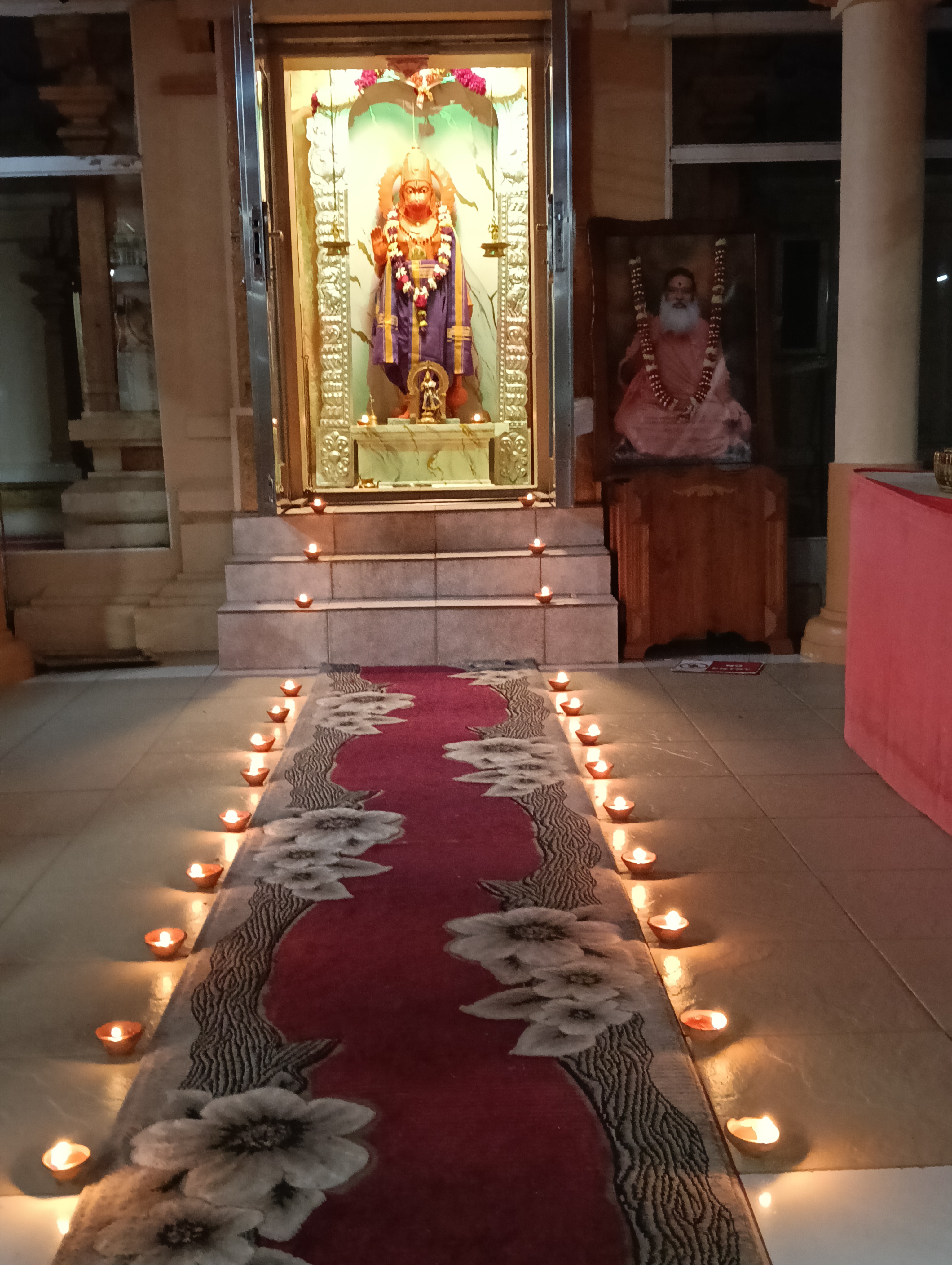
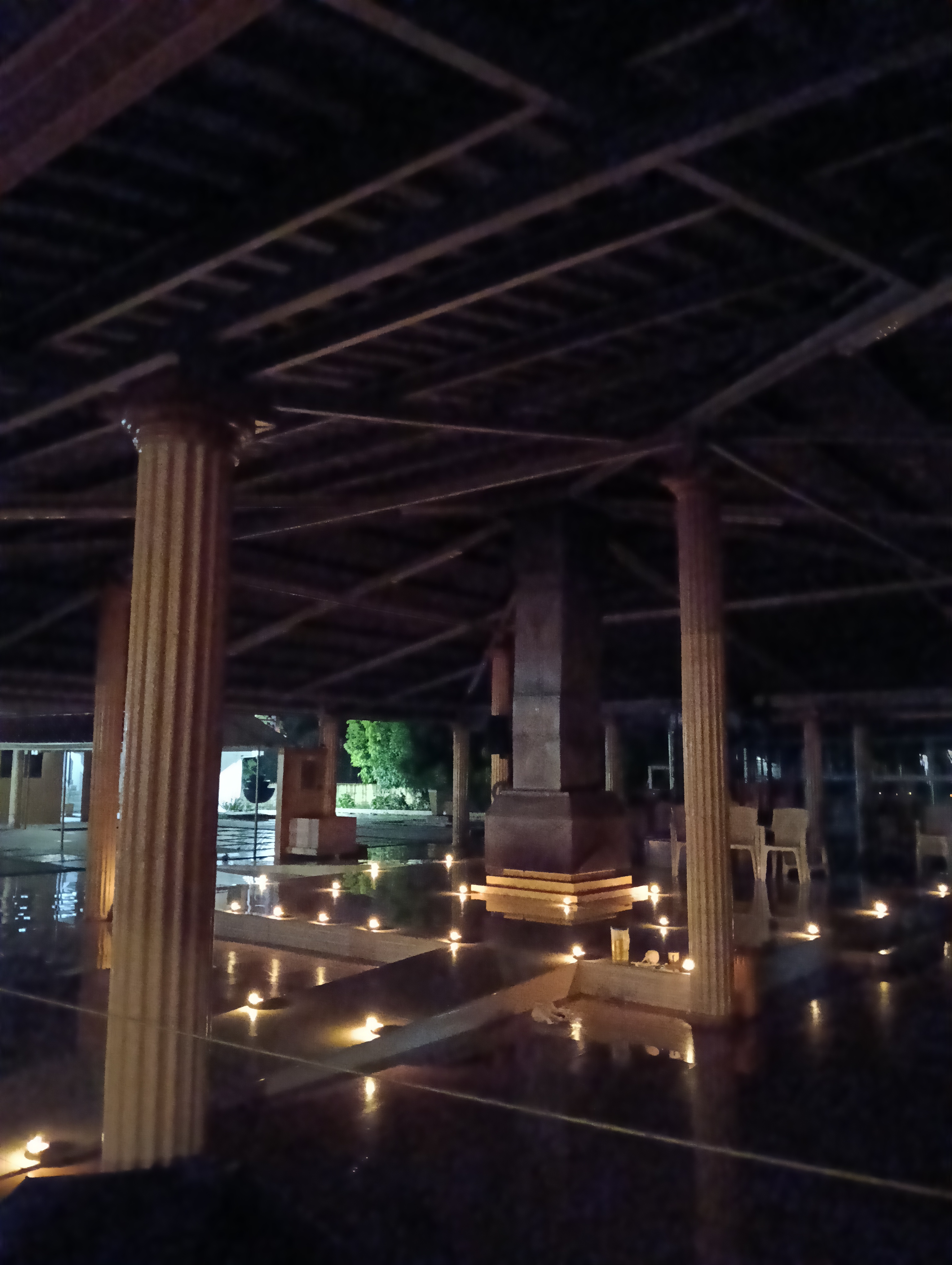
In my heart, I know that Sri Swamiji Himself had guided us there — turning an ordinary family drive into an extraordinary spiritual experience. He knew I miss home and He gave me the place I always refer to as home, by the feet of Lord Hanuman. The atmosphere was serene, sacred, and filled with a light that went far beyond the flicker of lamps. It was the light of Sri Swamiji’s blessings, of peace and inner renewal. Meeting Datta family at DYC is always a blessing and meeting Sadhna there was exactly that. The kids were immediately drawn to the sight of her lighting deyas so you could imagine their excitement when they got the opportunity to help. We were able to witness the initial lights, witness evening Aarti and then join in helping with the lighting of deyas around Lord Hanuman. When Punditji (Pundit Durga Prasad Sharma) finished Aarti he joined and Shiva and the kids too, while I helped with sorting the deyas. A visitor who stopped by also did the same. The kids thoroughly enjoyed the experience and the final result was an amalgamation of lights.

Watching the deyas shimmer was in every sense a humble, heartfelt Deepavali offering, filled with love, gratitude, and faith. The temple glowed with divine radiance, the air filled with the soft hum of devotion and the light of deyas. If Sadhna was not there lighting deyas, we would not have known the aarti was pending. If Sadhna was not there lighting deyas we may not have stayed for as long as we did.

Standing there, surrounded by divine energy, I realized how perfectly the day had unfolded. We began with simplicity — no big plans, no extravagance — and ended in sanctity. What started as just wanting to show the kids the lights had turned into a night of divine connection and deep inner peace.

It was the perfect evening for us with Sri Swamiji (Sri Datta Nada Prabhu) turning our quiet family day into a spiritual journey. As Punditji (Pundit Durga Prasad Sharma) pointed out lighting 365 lamps in the presence of Lord Hanuman on Deepawali is an immense blessing and we were fortunate to be a part of this. As the Facebook post states, “Each flame representing every day of the 365 days of this year symbolizes power, purity, and the cosmic alignment that connects our home with the divine power of wealth, positivity, and protection.”
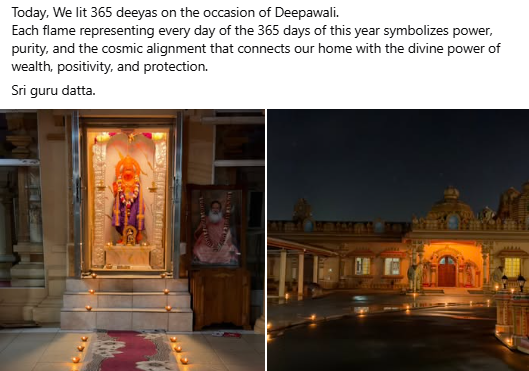
Screenshot from Sri Dattatreya Yoga Centre Trinidad and Tobago’s Facebook page where the significance of the lighting of the 365 deeyas is explained.

Deepavali 2025 reminded me that blessings can come quietly, wrapped in peace, family, and divine timing. Sri Swamiji always guides and everything unfolded as a present beautifully unwrapped. With Him, everything is extra special because it is guided by His Holy Hands.

 May this Deepavali and every day ahead be filled with peace, joy, and the boundless grace of Sri Swamiji. 🪔

Posted in Indian Arrival Day, Life, Trinidad and Tobago, You Tube

Celebrating 180 Years of Indian Arrival in Trinidad: A Journey of Resilience and Legacy

May 30, 2025, marks a momentous milestone in Trinidad and Tobago’s rich multicultural history — the 180th anniversary of Indian Arrival Day. It is a day to honour the endurance, culture, and contributions of the East Indian community, whose journey began in 1845 with the arrival of the first indentured laborers from India aboard the Fatel Razack.

This historic voyage marked the beginning of a new chapter, not only for those who arrived seeking opportunity, but for the very fabric of Trinidad and Tobago. Over 140,000 Indians would follow over the decades, facing hardship, uncertainty, and cultural displacement. Yet, through resilience and deep-rooted values, they laid the foundation for generations to flourish.

Today, the influence of the Indian community is deeply woven into the national identity — from cuisine, music, and religion, to agriculture, entrepreneurship, and education. Festivals such as Divali, Phagwa, and Indian Arrival Day itself reflect the vibrant legacy passed down through time. Today, Trinidad and Tobago is the home of the 85 ft Sri Karya Siddhi Hanuman Murti which is the tallest murti in the Western Hemisphere and it stands majestically tall at the Sri Dattatreya Yoga Centre in Carapichaima. Today, Trinidad and Tobago it is the home of the Indian Caribbean Museum of Trinidad and Tobago.

Trinidad and Tobago has been profoundly shaped by the contributions of its East Indian population. Over the years, these contributions have enriched the nation’s culture, economy, religion, cuisine, language, and national identity. Here are some key areas where East Indian influence is especially notable:

1. Religion and Spiritual Life

  • Hinduism and Islam took root in Trinidad through Indian indentured laborers, and today, both are integral parts of the country’s religious landscape.
  • Temples and mosques are found throughout the islands, including iconic sites like the Temple in the Sea and Sri Dattatreya Yoga Centre.
  • Religious celebrations such as Divali (Festival of Lights) and Eid-ul-Fitr are national holidays, celebrated by all communities.

2. Festivals and Cultural Celebrations

  • Phagwa (Holi) is celebrated with color, song (chowtal), and community spirit.
  • Divali Nagar is a major annual cultural event, showcasing Indian music, dance, food, and spiritual teachings.
  • Indian Arrival Day (May 30) itself is a public holiday commemorating the arrival and legacy of Indian people.

3. Music and Performing Arts

  • East Indians brought with them musical traditions such as bhajans, chowtal, and classical Indian music, which have evolved into unique Trinbagonian forms.
  • The tassa drum is a lively and powerful musical instrument rooted in Indian tradition and now a staple at weddings, funerals, and cultural events.
  • East Indian dance forms, such as kathak and folk dances, have found a place in schools and community events.
Display for Indian Arrival Day taken at The Price Club in Chaguanas (pic 1)

4. Food and Cuisine

  • Trinidad and Tobago’s food culture has been heavily influenced by East Indian cuisine.
  • Dishes like roti, dhal, doubles, sada and fry aloo, channa and curry, and kurma are now beloved national staples.
  • The use of spices, chutneys, and cooking techniques has created a unique Indo-Caribbean flavor.
Display for Indian Arrival Day taken at The Price Club in Chaguanas (pic 2)

5. Language and Literature

  • Words from Hindi, Bhojpuri, and Urdu have blended into local dialects and expressions.
  • Indo-Trinidadian writers, poets, and scholars have contributed richly to national and Caribbean literature, exploring themes of identity, migration, and memory.

6. Agriculture and Economy

  • Early Indian settlers were primarily employed in agriculture and played a significant role in sustaining the sugar and rice industries.
  • Many Indians became landowners and farmers after indentureship ended, helping to feed and support the growing nation.

7. Education and Public Life

  • Indo-Trinidadians have excelled in education, producing scholars, educators, and professionals across fields.
  • They have contributed significantly to politics, law, and public service, with many serving as national leaders, ministers, and diplomats.

East Indian contributions in Trinidad and Tobago are not only visible—they are foundational. From temples to tassa, roti to resilience, and music to multiculturalism, their legacy continues to shape and define the spirit of the nation.

What exactly did we do? That is, in addition to dressing our kids with East Indian wear. Our daughter needed to choose food or delicacy East Indian brought to Trinidad and Tobago. First, she wanted to prepare alloo pies and yes, we did, but then we decided for her project for her to prepare tilly cake with white till (also known as sesame seeds) which is a sweet prepared for Goddess Saraswati especially for Basant Panchami.

The 180th anniversary is more than a commemoration — it is a celebration of survival, adaptation, and unity. It is also a reminder of the shared history that binds the nation together, where diverse roots grow in harmony.

As we reflect on this milestone, let us pay tribute to the sacrifices of the early arrivals, honor the wisdom of our elders, and continue nurturing a future built on mutual respect and cultural pride.

Happy Indian Arrival Day, Trinidad and Tobago — 180 years strong and thriving.