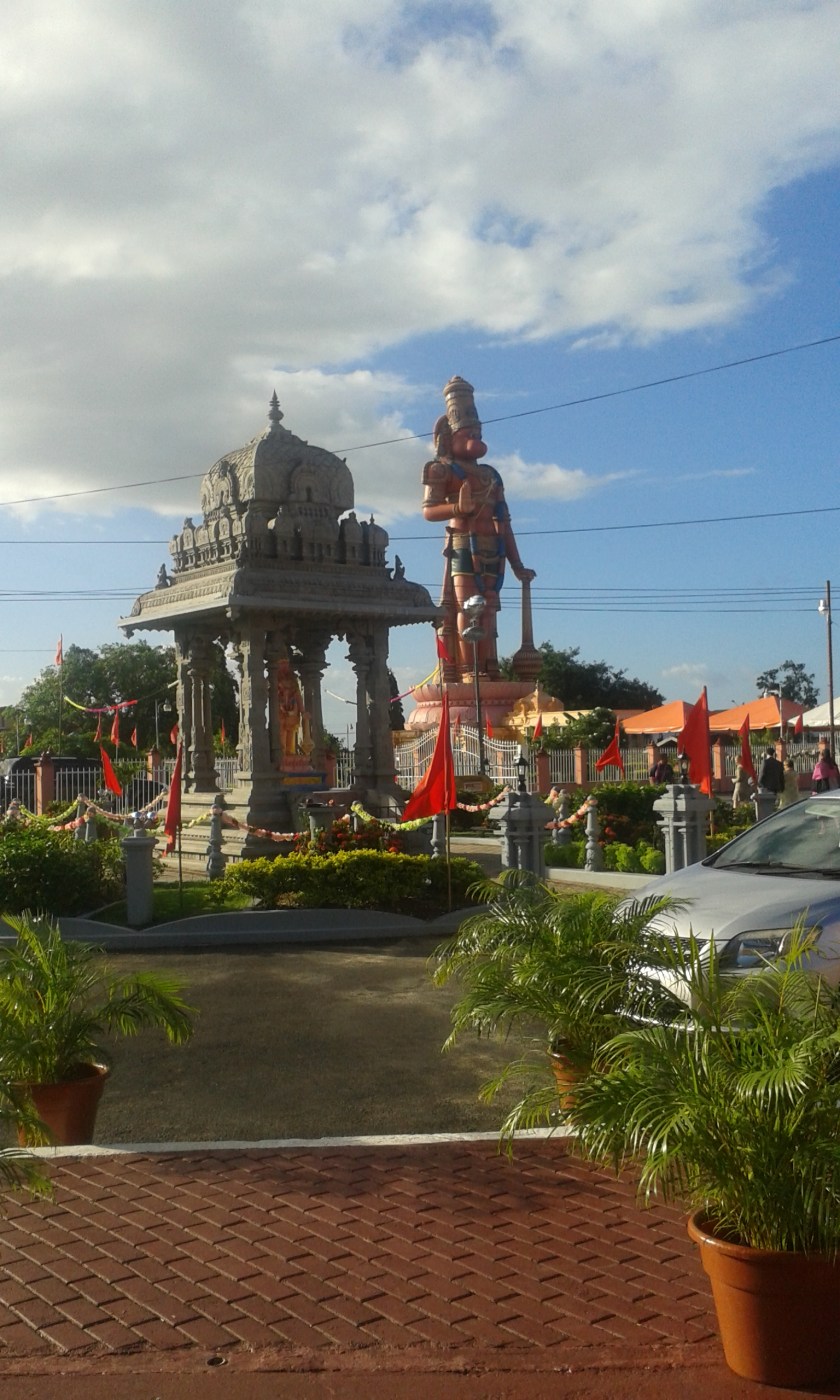
June 9, 2003, marked a historic and blessed day for Trinidad and Tobago as His Holiness Param Pujya Sri Ganapathy Sachchidananda Swamiji consecrated the magnificent 85-foot Sri Karya Siddhi Hanuman Murti at the Sri Dattatreya Yoga Centre in Carapichaima. Twenty-three years later, as the sun rises over Carapichaima devotees continue to gather in gratitude and devotion, celebrating the blessings, protection, and inspiration of Lord Hanuman.
For many of us, this is far more than an anniversary. It is an opportunity to reflect on the blessings, inspiration, and spiritual strength that Lord Hanuman has bestowed upon countless devotees over the past twenty-three years.
When His Holiness Sri Ganapathy Sachchidananda Swamiji envisioned this magnificent murti, it was not merely to create a landmark. It was to establish a spiritual beacon—a place where devotees could find hope during difficult times, courage when faced with challenges, and faith when life’s path seemed uncertain. Today, that vision continues to flourish.
Standing majestically at the Sri Dattatreya Yoga Centre in Carapichaima, the 85-foot Karya Siddhi Hanuman Murti has become one of the most iconic Hindu monuments in the Western Hemisphere. Yet it’s true greatness cannot be measured in feet or metres. Its greatness lies in the countless prayers offered at its feet, the tears of gratitude shed by devotees whose prayers have been answered, and the enduring faith it has inspired across generations.
For twenty-three years, Lord Hanuman’s presence has reminded us of the qualities that define his divine character—unwavering devotion to God, selfless service, humility despite immense power, and the courage to overcome every obstacle in the pursuit of righteousness. These timeless virtues continue to guide devotees in Trinidad and Tobago and throughout the world.
The murti has also become a symbol of the remarkable journey of Hinduism in Trinidad and Tobago. It stands as a testament to the dedication and perseverance of our ancestors who carried their faith across oceans and planted its roots firmly in this land. Today, the murti welcomes thousands of visitors annually, serving as a bridge between cultures and a source of pride for our nation.
As we celebrate this 23rd anniversary, we offer our deepest gratitude to Sri Ganapathy Sachchidananda Swamiji, whose divine vision and blessings made this sacred monument possible. We also honour the devotees, volunteers, donors, and well-wishers whose dedication transformed that vision into reality.
Most importantly, we bow in reverence to Lord Hanuman himself—the eternal servant of Lord Rama, the embodiment of devotion, and the remover of obstacles. May his blessings continue to protect our families, strengthen our communities, and inspire us to live lives of faith, service, and compassion.
The magnificent 85-foot Karya Siddhi Hanuman Murti is the realization of the divine vision of His Holiness Param Pujya Dr. Sri Sri Sri Ganapathy Sachchidananda Swamiji, Founder of Avadhoota Datta Peetham. Envisioned as a beacon of faith, courage, and devotion, the murti was created to inspire generations of devotees and serve as a place of prayer, peace, and spiritual upliftment. On 9 June 2003, Sri Swamiji personally consecrated the murti, marking a historic milestone in the spiritual heritage of Trinidad and Tobago.
Bringing this sacred vision to life was Shilpi Kala Ratna T. Subramanian Sthapathi, the renowned master architect who designed and constructed the murti according to the timeless principles of Dravidian temple architecture and Shilpa Shastra. Together with a skilled team and the unwavering support of devotees, their combined efforts created one of the most iconic Hanuman monuments in the Western Hemisphere—an enduring symbol of devotion, divine grace, and the timeless teachings of Lord Hanuman.
Twenty-three years have passed since the sacred consecration ceremony, yet the murti continues to touch hearts and transform lives. As we celebrate this blessed occasion, may we recommit ourselves to the values Lord Hanuman represents and carry his teachings into our daily lives.
May Sri Karya Siddhi Hanuman bless all with strength, wisdom, devotion, peace, and success in all righteous endeavours.
Jai Hanuman! Jaya Guru Datta! Sri Guru Datta!